


The Great Horned Owl
The Tiger of the Sky
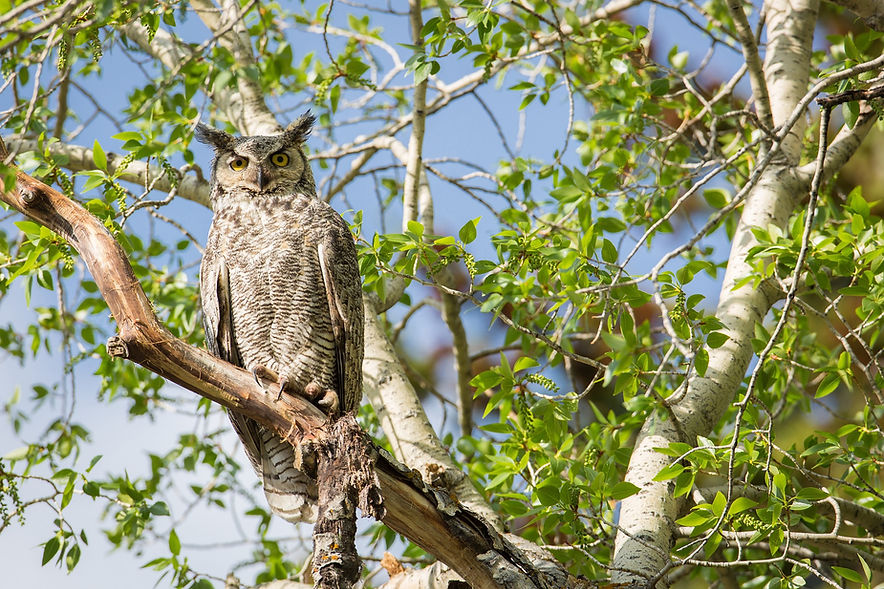
The Great Horned Owl is one of the largest and strongest owls in North America. They get their name from the tufts of feathers on their head that look like ears or horns. They are famous for their deep, soft hoots that can be heard echoing through the woods at night.

RANGE
The Great Horned Owl is very widespread. You can find them across almost all of North America, from the freezing forests of Alaska to the warm deserts of Mexico. They also live all the way down through South America!

HABITAT
These owls can live in many different places, like deep forests, rocky canyons, or even city parks. Like the American Badger, they do not like to build their own homes. Instead, they usually move into an old nest that was built by a hawk, a crow, or even a squirrel.

DIET
The Great Horned Owl is a top carnivore. They have a very large menu and can catch animals that are much bigger than they are!
Favorite Foods: They eat many small mammals like rabbits, mice, and voles.
The Brave Hunter: They are one of the only animals that will hunt skunks because owls do not have a very good sense of smell!
From the Sky: They also catch other birds, like crows and even smaller owls.

SIZE & WEIGHT
Great Horned Owls are big and heavy for birds. They are usually 18 to 25 inches tall. Even though they look very fluffy, they only weigh about 3 to 4 pounds. Their feathers take up a lot of space to help them fly quietly and stay warm.

LIFE CYCLE
Great Horned Owls are some of the earliest birds to have babies each year, often laying eggs while there is still snow on the ground!
A mother usually lays 2 or 3 white eggs.
The mother sits on the eggs to keep them warm while the father hunts for food.
When the babies (called owlets) hatch, they are covered in white, fuzzy down feathers.
They stay with their parents for a long time to learn how to fly and hunt before they go off on their own.

PREDATORS
Because they are so big and tough, adult Great Horned Owls do not have many enemies. However, they are often "mobbed" by crows. This is when a group of crows finds an owl sleeping during the day and screams at it until it flies away. Their biggest threats are larger eagles or other Great Horned Owls.
Amazing Adaptations
The Great Horned Owl is built to be a perfect nighttime hunter.
Silent Flight: Their feathers have soft, fringed edges that muffle the sound of the wind. This allows them to sneak up on their prey without making a single "whoosh" sound.
Super Vision: Their big yellow eyes cannot move back and forth like ours. Instead, they have to turn their whole head! An owl can turn its head almost all the way around to look behind its back.
Powerful Talons: Their feet have very long, sharp claws called talons. They can grip with more strength than almost any other bird.

Animal Talk

How Do Great Horned Owls Communicate?
Great Horned Owls are famous for their deep hoots, but hooting isn't the only sound they make! They use hoots, calls, and other sounds to communicate with their mates, defend their territory, and care for their young.
The Classic Hoot: Great Horned Owls give a series of deep, rhythmic hoots to announce their presence and defend their territory. Mated pairs may even hoot back and forth in a duet.
Barks, Hisses & Bill Snaps: When disturbed or threatened, a Great Horned Owl may bark, hiss, scream, or snap its bill. These sounds can serve as a warning to stay away.
The Begging Shriek: Young Great Horned Owls make loud, raspy screeches and begging calls when they want food. Older fledglings may continue calling to their parents even after they've left the nest.
Fun Animal Talk Fact: Male and female Great Horned Owls both hoot, but their voices aren't exactly alike. The male usually has a deeper voice, while the female's hoots are generally higher-pitched—even though females are larger than males!
Respecting Wildlife
Great Horned Owls are very helpful neighbors to have around our homes and farms!
Pest Control: Because they love to eat mice, rats, and voles, they help keep these little critters from getting into our gardens or houses.
Give Them Space: While they are beautiful to look at, it is best to watch them from a distance with binoculars. They are very protective of their nests and prefer to be left in peace.
Watch Your Pets: Since these owls are so big and strong, it is a good idea to keep small pets like kittens or bunnies inside at night when the owls are out hunting.
Great Horned Owl Photos


